Reconfiguring Procedural Knowledge for Compositional Robot Skill Adaptation
NeurIPS2026
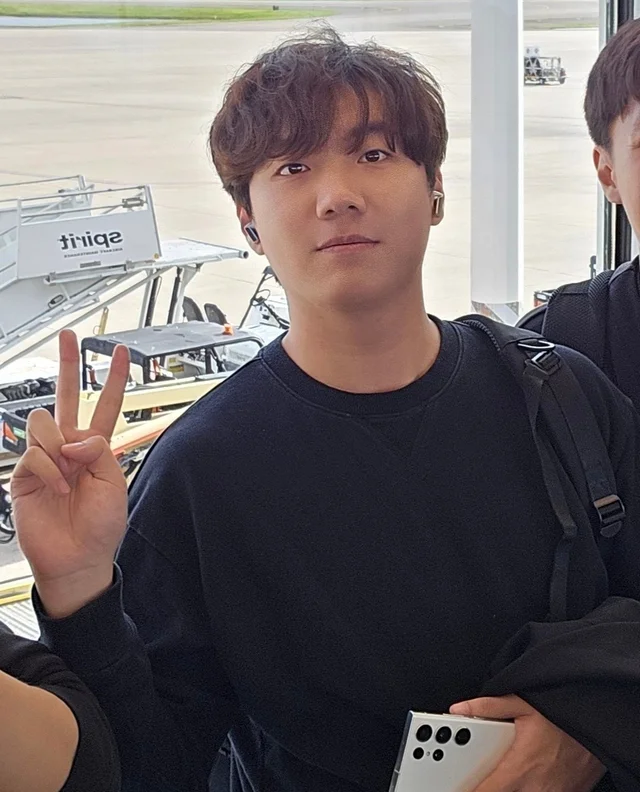
I am a Ph.D. student in the CSI-Agent Group at Sungkyunkwan University, advised by Prof. Honguk Woo. Lifelong learning agents struggle not because they cannot learn, but because what they learn stays buried inside parameters where nothing can be inspected or reorganized. My research pursues super-adaptive intelligence for physical agents by turning their competence into governable memory-based knowledge, so that adaptation becomes a fast memory operation, recomposing what the agent knows into new behavior.
This direction has progressed from retrievable skill memory to a compatibility layer between evolving skills and the policies that use them, and now toward reconfigurability, where editable memory composes skills into executable behavior at deployment time. I validate this on real robots, building full manipulation stacks across platforms such as the Franka Research 3 and UR7e and adapting quickly to new hardware. In my recent systems, a policy adapts to new scenes through local memory updates instead of retraining. I also completed an IITP-sponsored visiting scholar program at Carnegie Mellon University, where I led the AIER project and built a robot cannon system for edge computing.
I am a Ph.D. student in the CSI-Agent Group at Sungkyunkwan University, advised by Prof. Honguk Woo. Lifelong learning agents struggle not because they cannot learn, but because what they learn stays buried inside parameters where nothing can be inspected or reorganized. My research pursues super-adaptive intelligence for physical agents by turning their competence into governable memory-based knowledge, so that adaptation becomes a fast memory operation, recomposing what the agent knows into new behavior.
This direction has progressed from retrievable skill memory to a compatibility layer between evolving skills and the policies that use them, and now toward reconfigurability, where editable memory composes skills into executable behavior at deployment time. I validate this on real robots, building full manipulation stacks across platforms such as the Franka Research 3 and UR7e and adapting quickly to new hardware. In my recent systems, a policy adapts to new scenes through local memory updates instead of retraining.
I also completed an IITP-sponsored visiting scholar program at Carnegie Mellon University, where I led the AIER project and built a robot cannon system for edge computing.
NeurIPS2026
We present RECENT, a refactoring-centric agent framework that enables efficient skill grounding with small language models by decoupling skill semantics from embodiment- and environment-specific execution binding. By representing skills as executable code, RECENT preserves semantic intent while grounding skills through localized code refactoring rather than full regeneration. Across diverse robot embodiments and dynamic environments, RECENT achieves the best performance among sLM-based Code-as-Policies methods and matches the task performance of LLM-based CaP.
We introduce MAC-Flow, a framework for multi-agent coordination that combines flow-based learning of joint behaviors with efficient one-step decentralized policies, achieving faster inference than diffusion-based approaches while maintaining comparable performance.
NeurIPS2025 ARLET workshop (Oral)
We introduce interactive world latent (IWoL), a representation learning framework designed to improve team coordination in multi-agent reinforcement learning (MARL). By directly modeling communication protocols, IWoL captures both inter-agent relations and task-specific world information, enabling decentralized execution with implicit coordination while avoiding the shortcomings of explicit message passing. Evaluations across diverse MARL benchmarks show that IWoL consistently enhances team performance and can be integrated with existing MARL algorithms for further gains.
NeurIPS2025 (Spotlight Top 3.2%)
Skill Incremental Learning (SIL) is the process by which an embodied agent expands and refines its skill set over time while maintaining policy compatibility. We introduce SIL-C, a framework that preserves compatibility between incrementally learned skills and downstream policies through a bilateral lazy learning-based mapping that aligns subtask and skill spaces. This enables complex tasks to benefit from improved skills without retraining existing policies. Across diverse SIL scenarios, SIL-C sustains compatibility and efficiency throughout the learning process.
We present NeSyC, a neuro-symbolic continual learner that emulates the hypothetico-deductive model by continually formulating and validating knowledge from limited experiences through the combined use of LLMs. NeSyC enables embodied agents to tackle complex tasks more effectively in open-domain environments.
Continual Imitation Learning (CiL) involves extracting and accumulating task knowledge from demonstrations across multiple stages and tasks to achieve a multi-task policy. We present IsCiL, an adapter-based CiL framework that addresses the limitation of knowledge sharing by incrementally learning shareable skills from different demonstrations, thus enabling sample-efficient task adaptation.
We propose a multimodal semantic skill learning framework for one-shot imitation learning in non-stationary environments. The approach enables agents to adapt quickly to new tasks through multi-modal skill representation and transfer.
Click the BibTeX entry or the button below to copy.